
Dental crowns & bridges are designed to restore damaged, weakened, or missing teeth — helping you regain both function and confidence in your smile. A cracked tooth that’s been troubling you for months. A cavity so large it’s beyond a filling. These are the dental problems that, left untreated, only get worse. But with the right restorative treatment, they can be addressed completely — giving you back a smile that looks natural, functions perfectly, and is built to last.
What is a Dental Crown
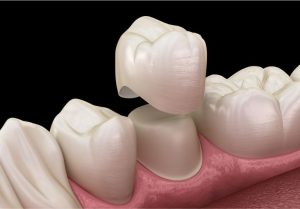
A dental crown is a custom-made cap that fits precisely over the entire visible portion of a damaged or weakened tooth, restoring it to its original shape, size, strength, and appearance. The crown encases the tooth completely above the gum line — protecting whatever natural tooth structure remains beneath, while restoring full function and a completely natural appearance on top.
When is a Dental Crown Needed
Your dentist at Fox lane Dental may recommend a crown in any of the following situations:
Severely decayed tooth — when decay has destroyed too much of the tooth structure for a filling to hold effectively
Cracked or broken tooth — a crown holds the fragments together and protects the tooth from further fracture
Worn teeth — teeth ground down by bruxism (grinding) or general wear and tear, restored to their original height and function
After root canal treatment — a root-treated tooth becomes more brittle and needs a crown to protect it from fracture
Severely discoloured or misshapen tooth — when a cosmetic improvement is needed that whitening or veneers cannot achieve
Bridge support — crowns on the adjacent (abutment) teeth anchor a bridge in place over a gap
Types of Dental Crowns at Fox lane Dental
The right crown material depends on the location of the tooth, the extent of damage, your aesthetic preferences, and whether treatment is on the NHS or private. At Fox Lane Dental, we discuss all options openly at your consultation:
Ceramic (All-Porcelain) Crowns
Ceramic crowns offer the most natural appearance and are the preferred choice for front teeth where aesthetics are a priority. The porcelain mimics the translucency and colour of natural tooth enamel, making ceramic crowns virtually impossible to distinguish from surrounding natural teeth. They contain no metal, making them ideal for patients with metal sensitivities or those who prefer a completely metal-free restoration.
Porcelain Fused to Metal (PFM) Crowns
PFM crowns combine a metal substructure for strength with a porcelain outer layer for natural appearance. They offer an excellent balance of durability and aesthetics, and are suitable for both front and back teeth. PFM crowns are one of the most widely used and clinically proven crown types in dentistry and have an outstanding long-term track record.
Metal Crowns
Metal crowns made from gold alloy or other metal alloys are the strongest and most durable option available. They require the least removal of natural tooth structure and are exceptionally resistant to wear. While not the most cosmetically appealing option, they are an excellent clinical choice for back teeth where biting forces are greatest and where the crown is less visible.
What is a Dental Bridge
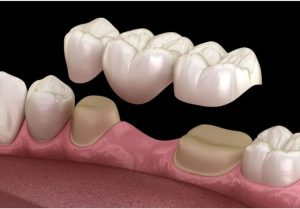
A dental bridge is a fixed restoration that replaces one or more missing teeth by spanning the gap and anchoring to the teeth or implants on either side. Unlike a removable denture, a bridge is permanently cemented in place — restoring the appearance and function of the missing tooth in a stable, secure way that feels far closer to a natural tooth.
Types of Dental Bridges at Fox Lane Dental
Conventional (Fixed-Fixed) Bridge
The most commonly used bridge type. The teeth on either side of the gap called abutment teeth are carefully prepared and crowned, with the replacement tooth (pontic) permanently suspended between them. A conventional bridge is highly stable, long-lasting, and provides excellent functional and aesthetic results when supported by strong adjacent teeth.
Adhesive (Resin-Bonded / Maryland) Bridge
A more conservative option that uses porcelain or metal wings bonded to the backs of the adjacent teeth requiring far less preparation of those teeth. This makes it a minimally invasive, tooth-preserving choice, particularly well suited for replacing front teeth where biting forces are lower.
Implant-Supported Bridge
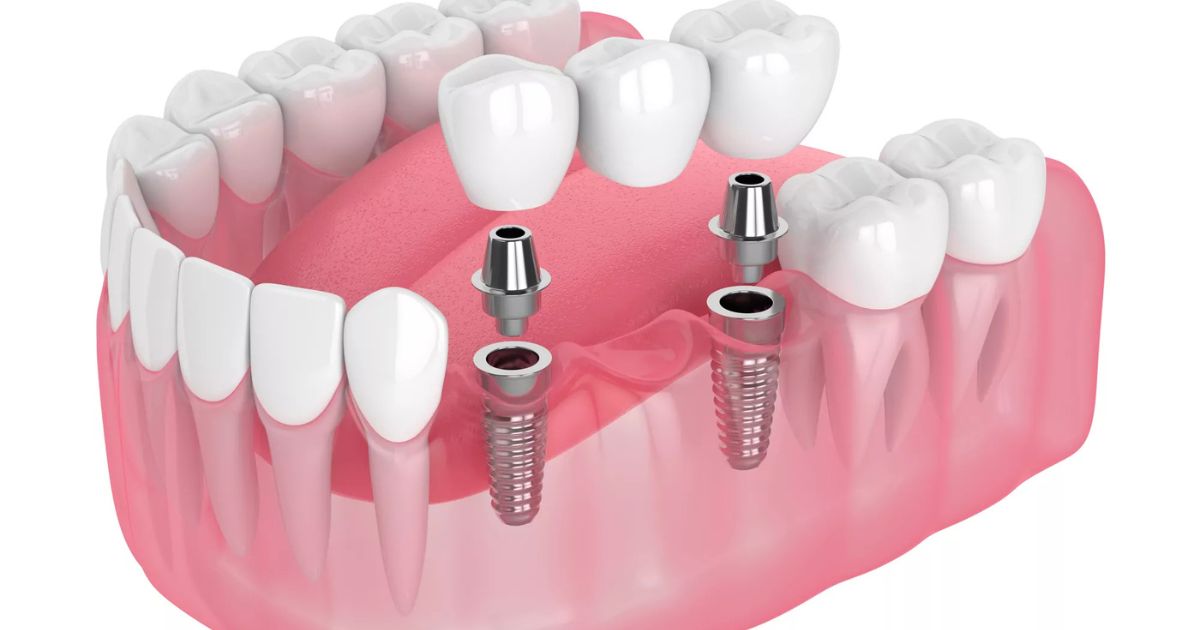
Rather than relying on adjacent natural teeth, this advanced option anchors the bridge on titanium dental implants placed directly in the jawbone. This is the most stable, long-lasting bridge option available — preserving adjacent teeth entirely and preventing bone loss beneath the replacement tooth. Fox Lane Dental also offers full dental implant treatment, ask our team for details.
The Crown & Bridge Treatment Process at Fox lane Dental
Crown and bridge treatment typically requires two appointments over two to three weeks. Here’s exactly what to expect:
Appointment 1 — Assessment, Preparation & Impression
Your dentist carries out a thorough examination, taking X-rays if needed, and discusses the most appropriate treatment plan for your situation. For a crown, the tooth is carefully shaped and reduced under local anaesthetic to create space for the crown to fit over it. For a bridge, the adjacent abutment teeth are similarly prepared. A highly accurate impression is taken and sent to our dental laboratory, where your bespoke crown or bridge is crafted to the exact specifications agreed with your dentist. A temporary restoration is fitted in the meantime so you are never without teeth. For patients who feel anxious about dental treatment, IV sedation is available at Fox lane Dental — creating a calm, relaxed experience throughout the procedure.
Appointment 2 — Fitting Your Permanent Crown or Bridge
Once your bespoke restoration returns from the laboratory, your dentist carefully checks the fit, colour match, and bite before permanently cementing it in place. Any minor adjustments are made to ensure a perfect, comfortable, and completely natural result. your new crown or bridge should feel completely natural in your mouth and look indistinguishable from your surrounding teeth.
Frequently Asked Questions About Crowns & Bridges
How long do dental crowns last?
With good oral hygiene and regular dental care, crowns typically last 10–15 years or longer. Metal crowns are the most durable and often last the longest. Ceramic and PFM crowns last equally as long with proper care.
Is the crown procedure painful?
Tooth preparation is carried out under local anaesthetic, so you won’t feel pain during the procedure. Some mild sensitivity for a few days afterwards is normal and settles quickly. IV sedation is also available for anxious patients.
What is the difference between a crown and a bridge?
A crown caps and protects a single existing tooth. A bridge replaces one or more missing teeth by spanning the gap — anchored to the teeth or implants on either side. Both are fixed, permanent restorations.
Will my crown match my natural teeth?
Yes — ceramic and PFM crowns are precisely colour-matched to your surrounding natural teeth. Most patients find even close friends can’t tell the difference between their crown and their natural teeth.
Book Your Consultation at Fox lane Dental Today
Whether you have a broken tooth that needs protecting, decay that’s gone beyond what a filling can fix, or a gap that’s been affecting your smile and your confidence — the expert restorative team at Fox lane Dental in Palmers Green is ready to help. Book your consultation and take the first step towards a fully restored, confident smile.